
The sun was out, warming our faces, and there was a wonderful buzz around the woodland as a great number of volunteers gathered at the gate, ready to get stuck in. There were spades, loppers, buckets and plenty of enthusiasm.
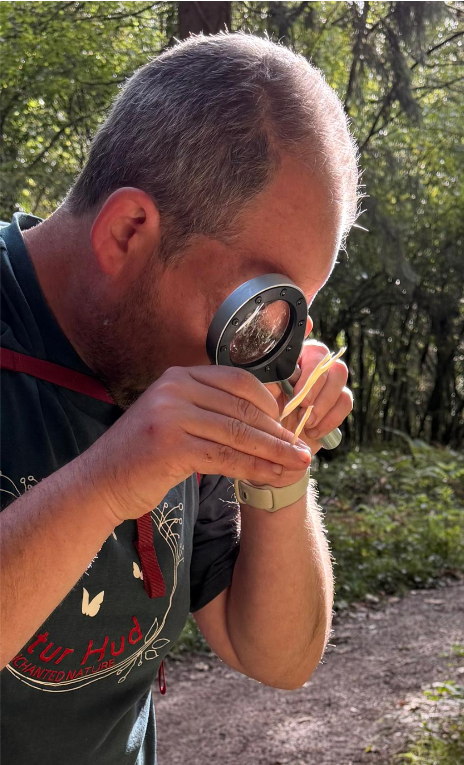
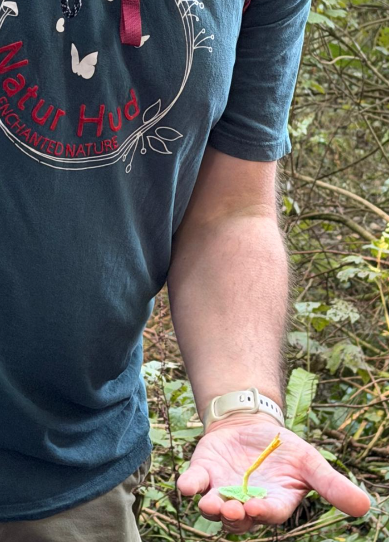
Our morning’s tasks were centred around the pond, cutting back from the banking to let more light in and give new growth the space and opportunity to emerge when winter has passed. It was one of those mornings when the work feels lighter because you’re doing it together, surrounded by people who care about the place.
And it wasn’t just our volunteers waiting at the gate.
There were plenty of new visitors to Coed y Werin arriving too, eagerly anticipating our Fantastic Fungi Walk.
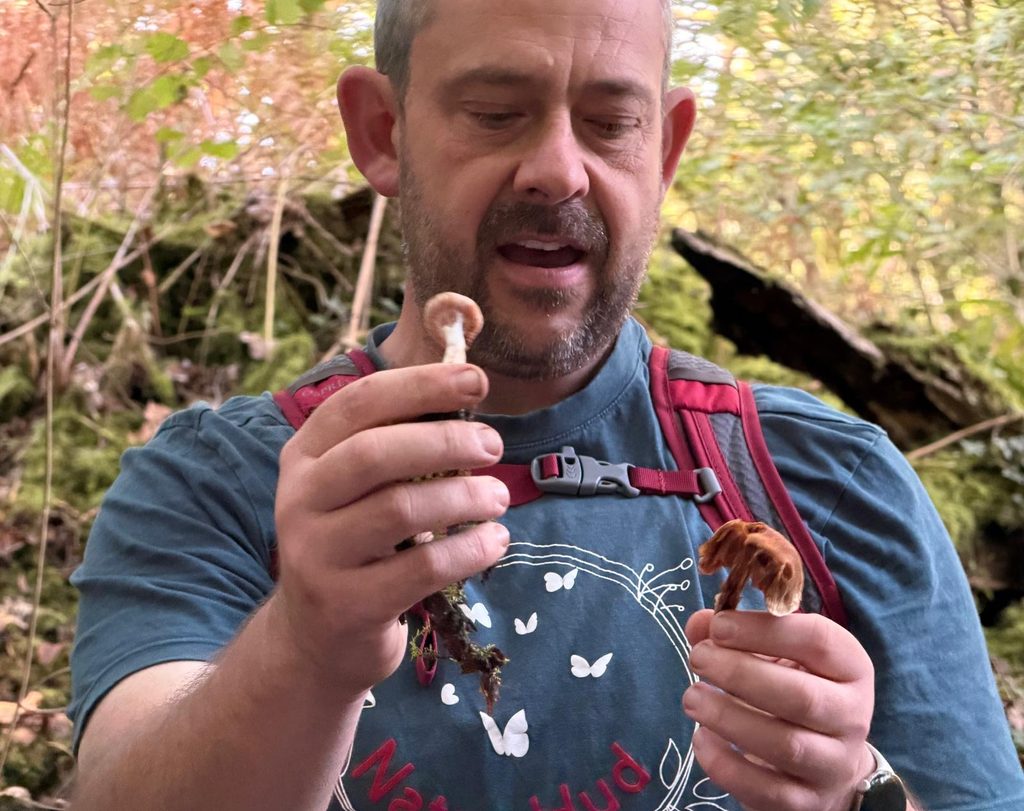
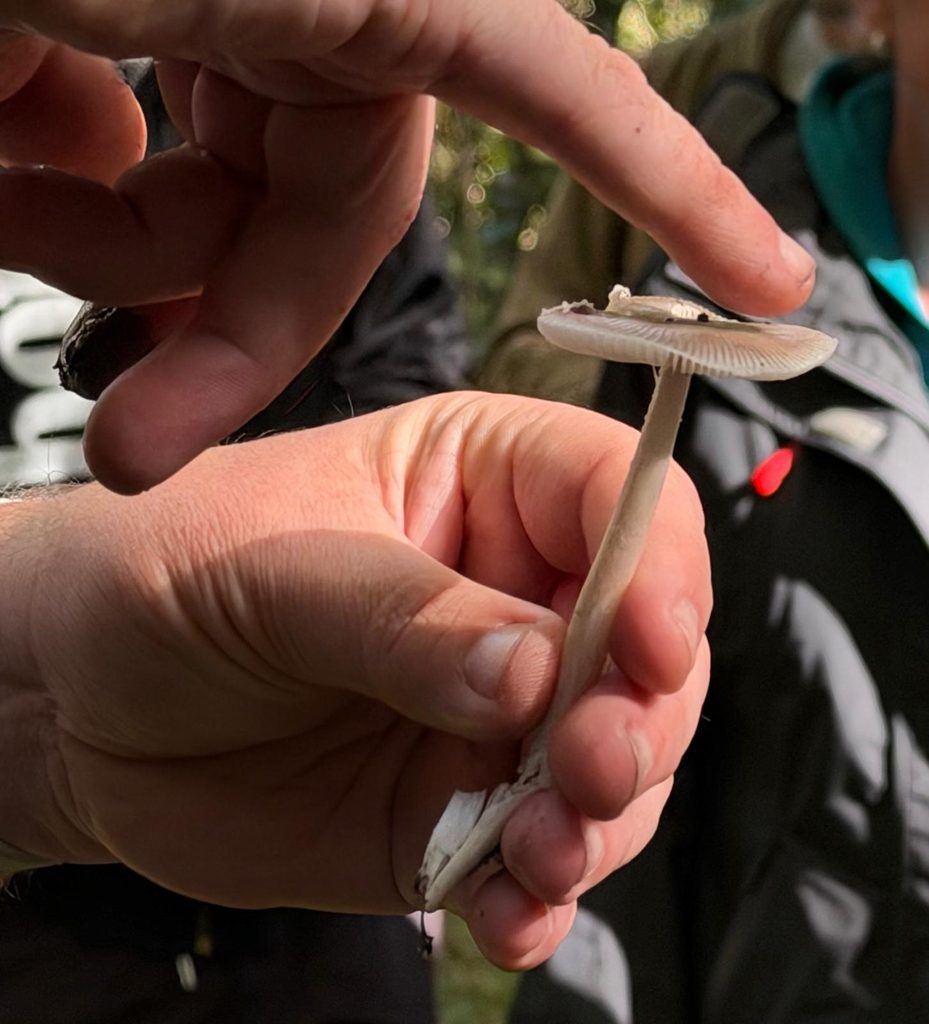
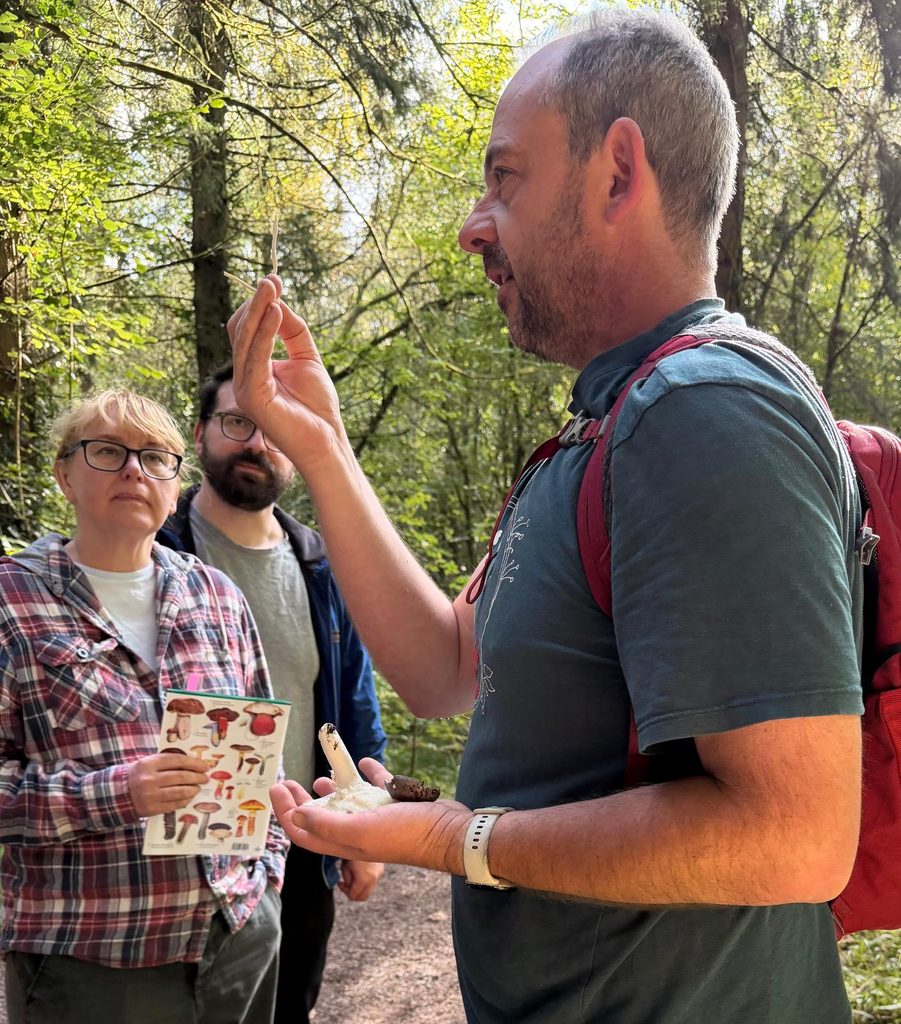
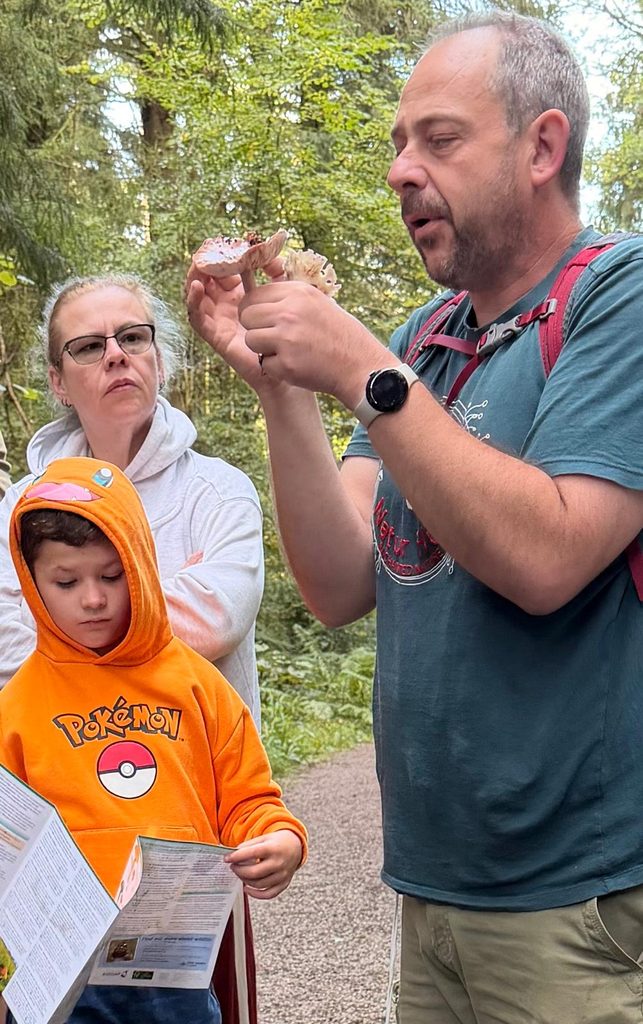
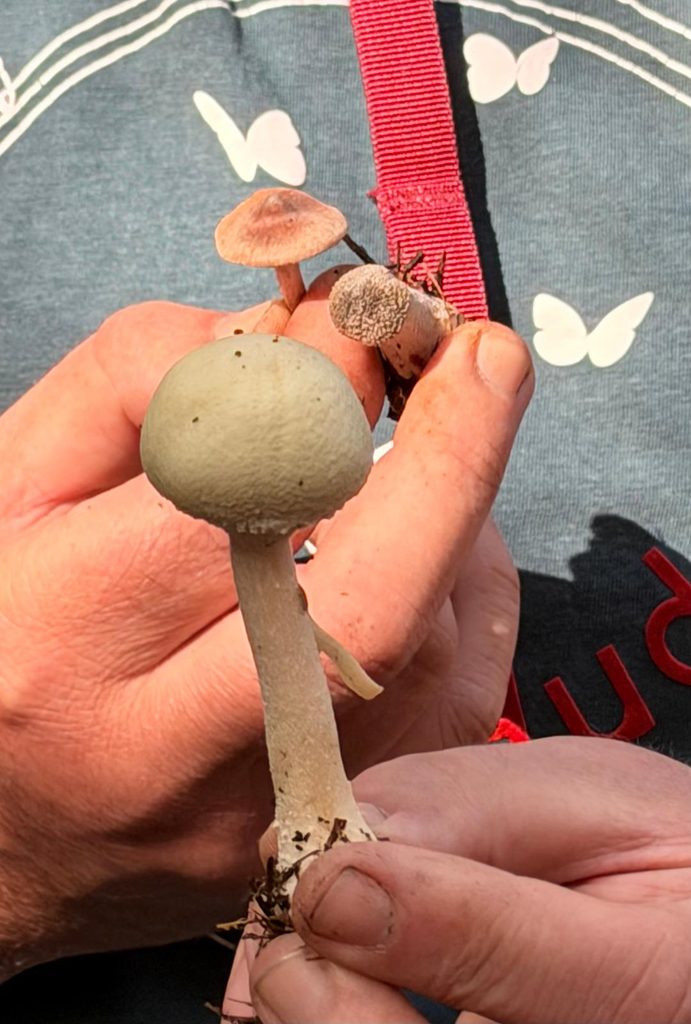
We were delighted to welcome back Chris Jones of Natur Hud, who joined us once again to lead a walk into the wonderfully strange and fascinating world of fungi at Coed y Werin. Chris greeted me carrying a white fungus which, from where I was standing, looked remarkably like he was offering me a lollipop.
“A lollipop for me?” I asked.
“No,” came his reply, with that wonderfully disarming Chris smile, “but if I were you, I wouldn’t eat it. You wouldn’t last more than a few days!” In his hand was the Common Death Cap.
And so, with his usual warmth and gentle humour, Chris began to explain just how deceptive fungi can be. He talked us through the toxins contained within the Death Cap and the devastating effects they can have if eaten. It was a moment that brought fascination and horror in almost equal measure.
But this is what Chris does so well. He has an extraordinary depth of knowledge, yet he never makes you feel that you are being given a science lesson. He simply opens a door and invites you in. And what a world he opened up.
There were many discoveries along the way all colours, shapes and sizes. Another that captured the audiences gasps came the Destroying Angel and Chris spoke about it almost as though he were preparing us for Halloween.
Some fungi, he explained, can even have an eerie glow in the dark. You couldn’t help but smile. But beneath the humour was something rather extraordinary. Chris was opening up a world that most of us rarely notice.
We learnt that fungi are not plants at all but belong to a kingdom of their own. In evolutionary terms they are, surprisingly, more closely related to animals than plants, and like us they respire oxygen.
Suddenly, the familiar woodland floor began to look very different.
Because fungi are doing far more than producing the mushrooms we occasionally notice beneath our feet. Much of their world is hidden from us a vast network quietly working away, breaking down what has died and helping return its nutrients to the soil and the wider ecosystem. Just imagine our woodland without them.
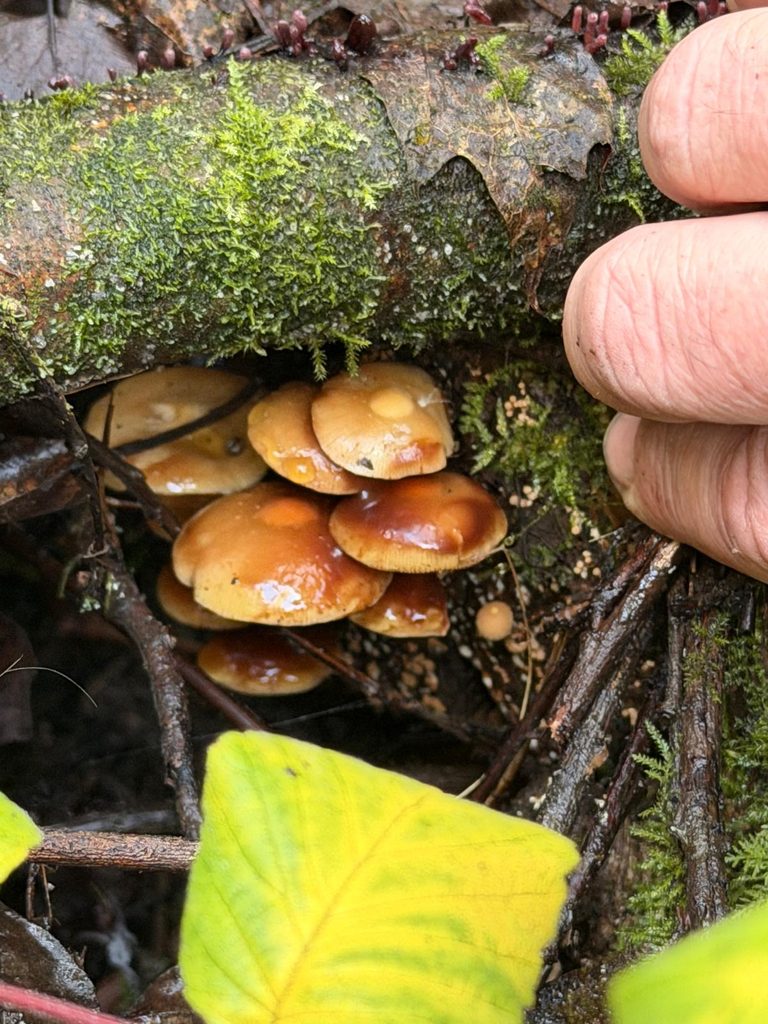
It would slowly become choked with fallen leaves, branches and deadwood, with precious nutrients locked away inside them. But fungi have another plan. A fallen tree isn’t simply the end of something. It becomes the beginning of something else. Through the slow process of decomposition, fungi help unlock what is held within it, returning nutrients so that life can continue. Nothing simply disappears. It becomes part of the next chapter.
Perhaps that is why fungi feel almost like chemical wizards quietly transforming one thing into another, carrying out their ancient work largely unnoticed.
And then Chris showed us another of their little tricks. He demonstrated how an earthball disperses its spores. A gentle brush can produce tiny puffs, but when pressure is applied such as an animal stepping on it an impressive plume of spores can burst into the air. As Chris demonstrated, the gasps from the group were audible.
It was such a simple thing, yet suddenly we were all looking at the woodland floor with completely different eyes.
And that is the magic of fungi.
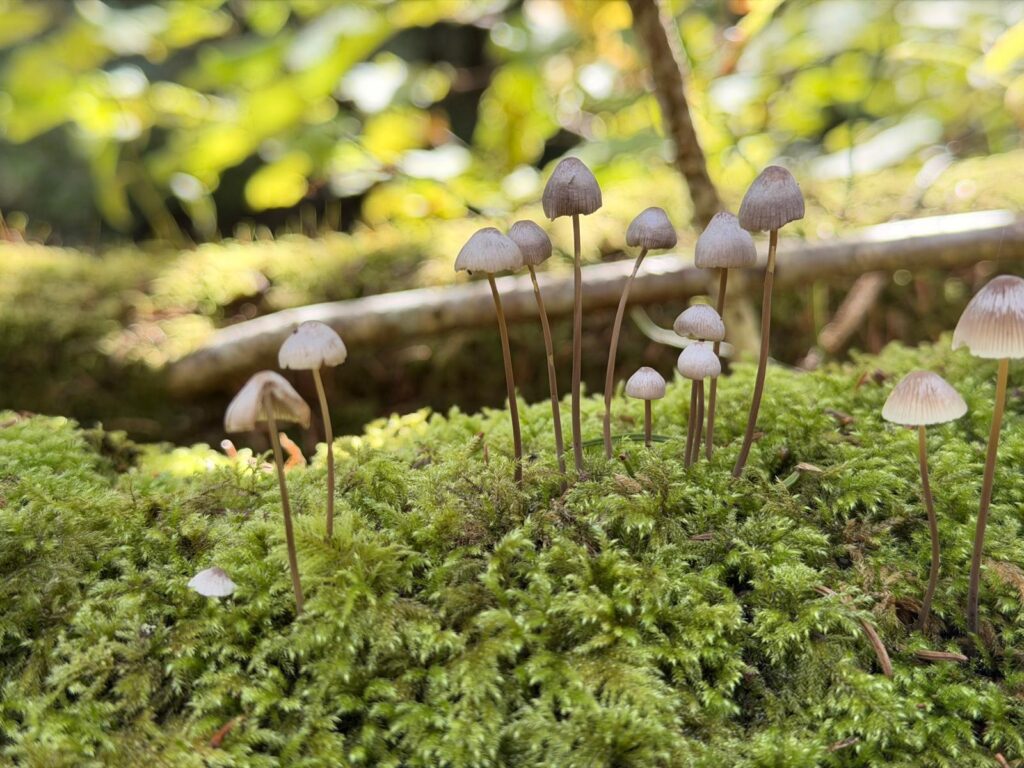
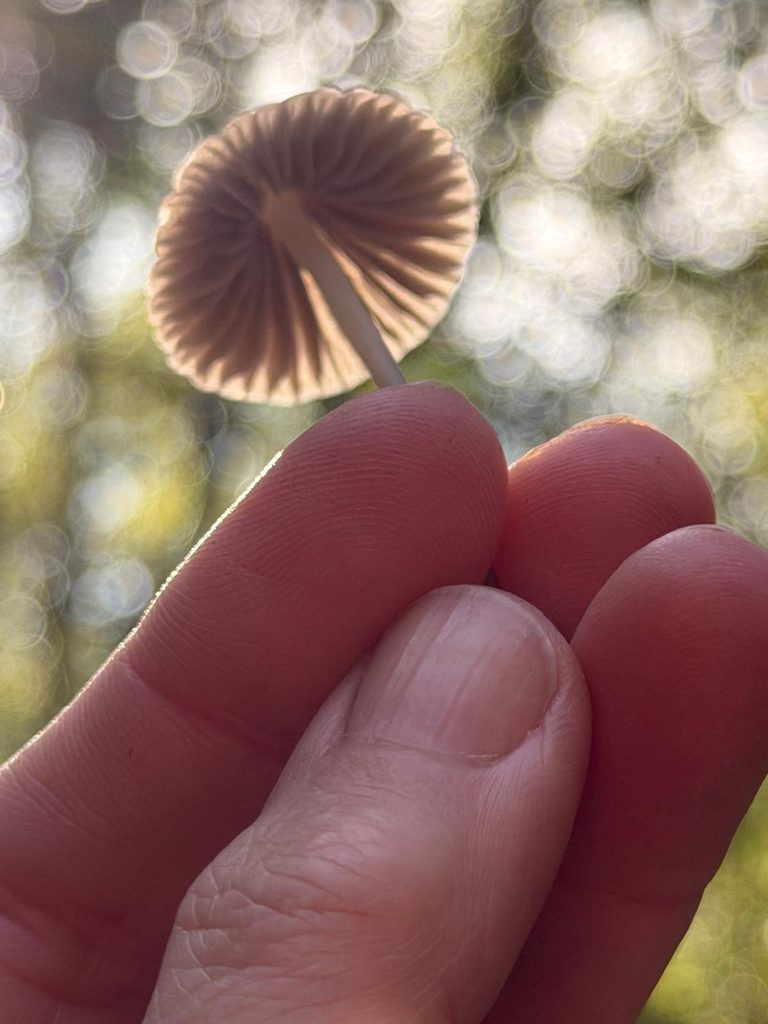
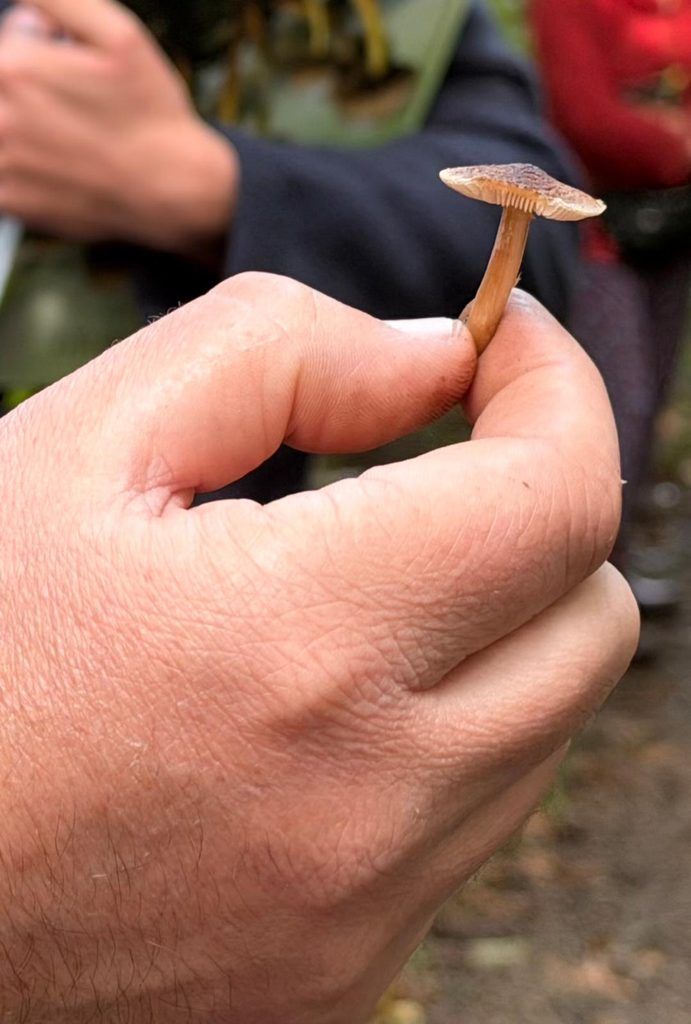
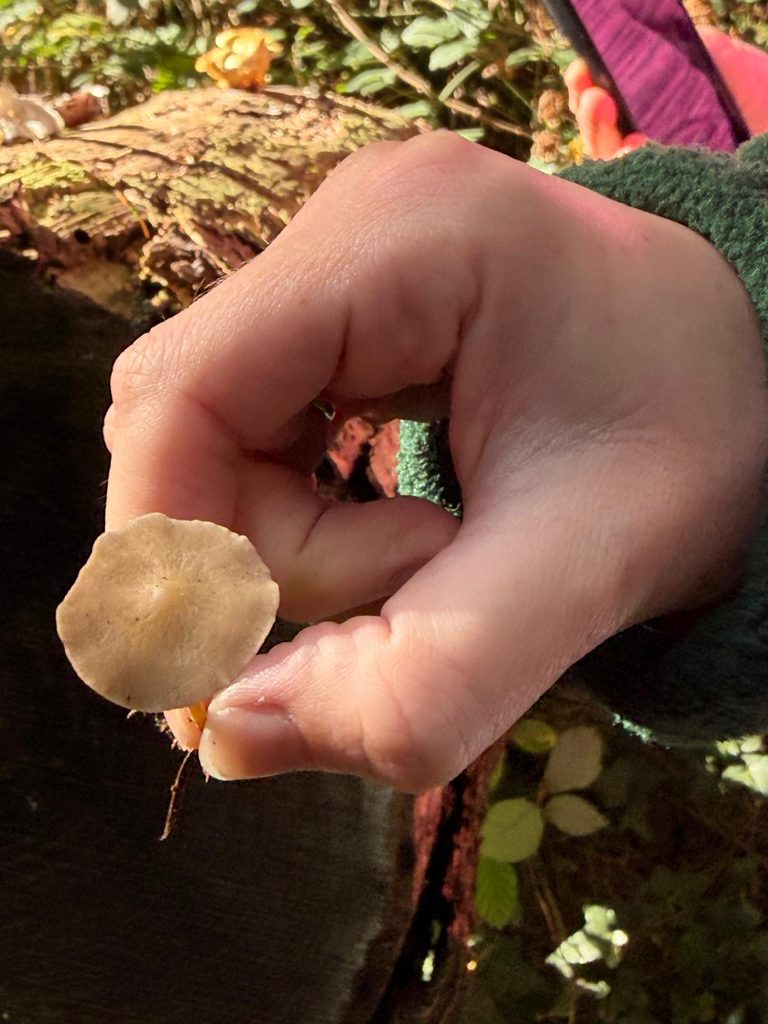
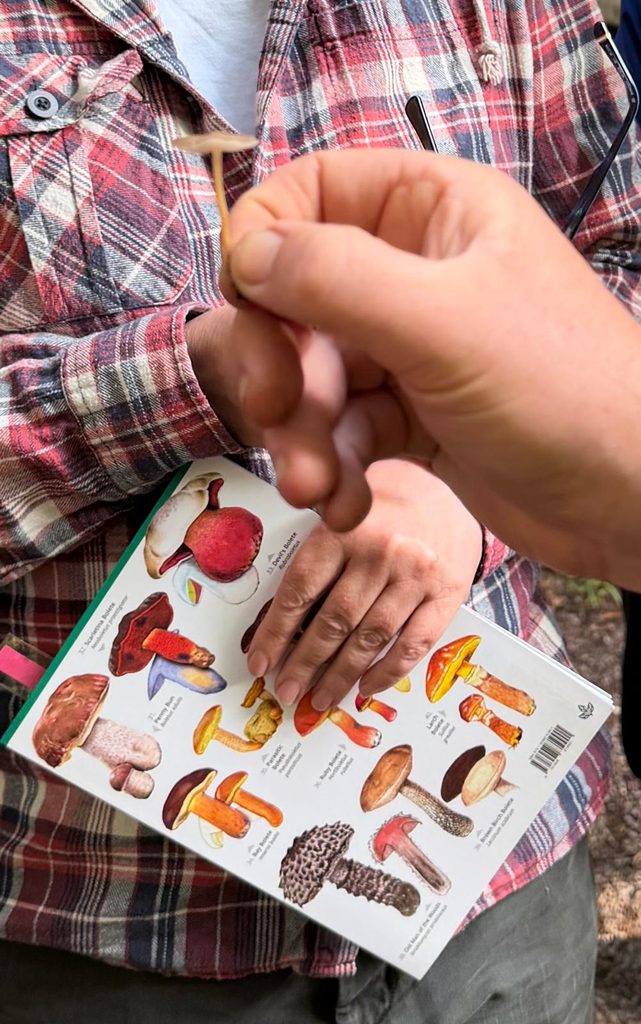
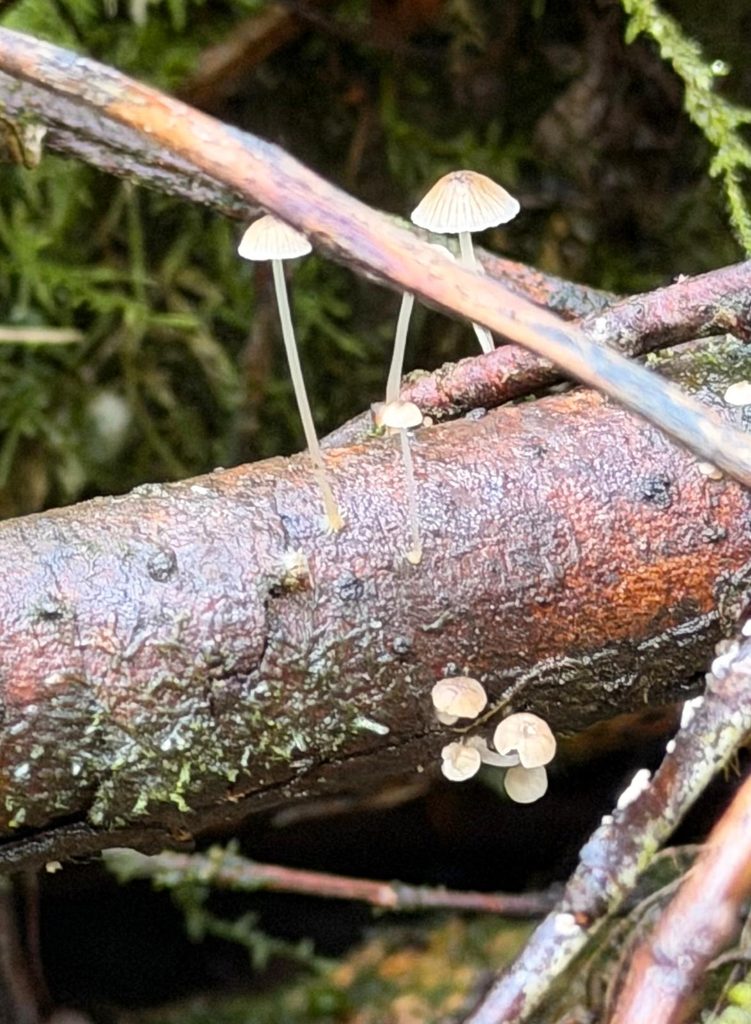
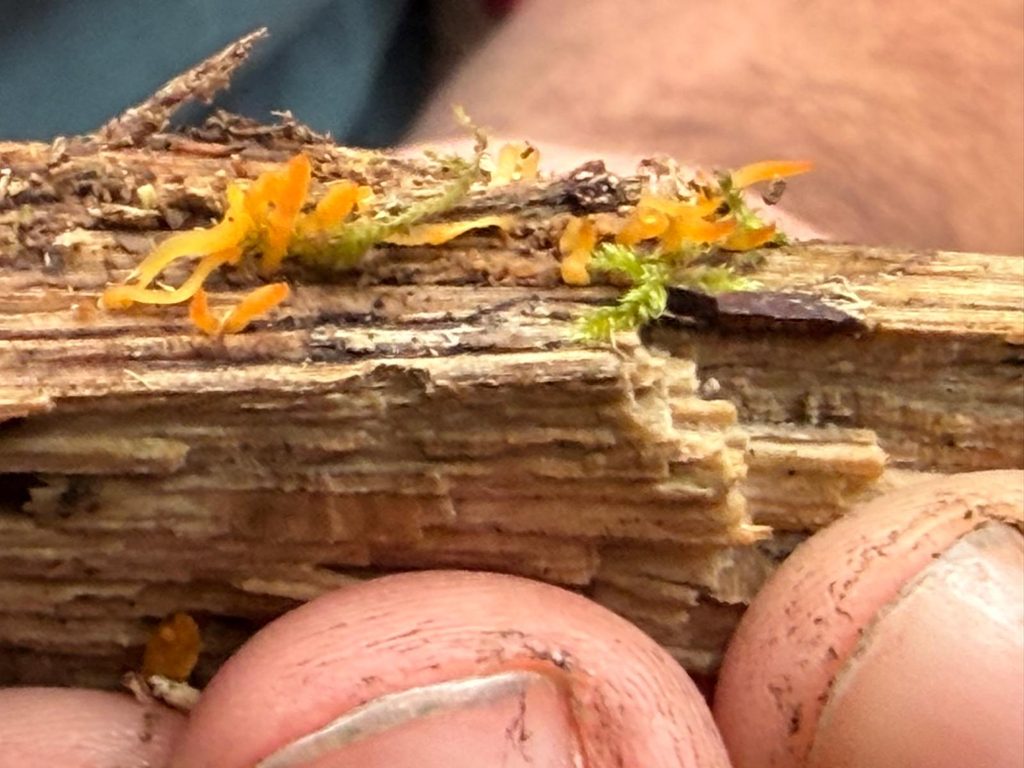
The mushroom itself is often only the visible, fruiting part of something much larger and mostly hidden. Some appear as delicate little sculptures, others as vivid shelves clinging to trees, while some are so small that we could easily walk straight past them.
Chris notices them and, more importantly, he makes us notice them too. His enthusiasm is infectious, but it is his quiet knowledge that makes the experience so special. He seems to know that there is always another story hiding in the smallest thing another connection, another adaptation, another glimpse into a world that has been here for an extraordinarily long time. Fungi remind us that nature doesn’t really work in neat beginnings and endings.
What looks like decay can be transformation. What looks like death can become nourishment and what appears to be a tiny mushroom on the woodland floor can be the visible expression of an ancient and intricate world beneath it.
Life, death and rebirth happening quietly all around us.
The engine of life at work all around us the true pioneers of this world. Beneath the leaves, beneath the fallen branches and beneath our feet an ancient and intricate world was quietly transforming death into life and endings into beginnings.
And just when we thought fungi couldn’t become any stranger, he showed us an example of one that can phosphoresce.
There were audible “ooohs” and “wows” from the group.
Chris explained the science behind the phenomenon, including the release of photons, and the difference between phosphorescence and bioluminescence. It was one of those moments when you could almost see the penny dropping across the group, the woodland floor suddenly becoming a place of physics and chemistry as well as biology.
One of our delegates summed it up perfectly:
“It was so great from start to finish, lots of laughter and wow moments in the group.”
Mattie, CWT Volunteer and attendee
And perhaps that is exactly what we hope for when people come into our woodland.
Yesterday, Chris simply gave us the opportunity to see a little more of it and judging by the faces, the questions, the laughter and those audible gasps, there were a lot of people who left the woodland seeing fungi and perhaps the woodland itself rather differently.
Thank you, Chris, for opening the magical mycelium door once again








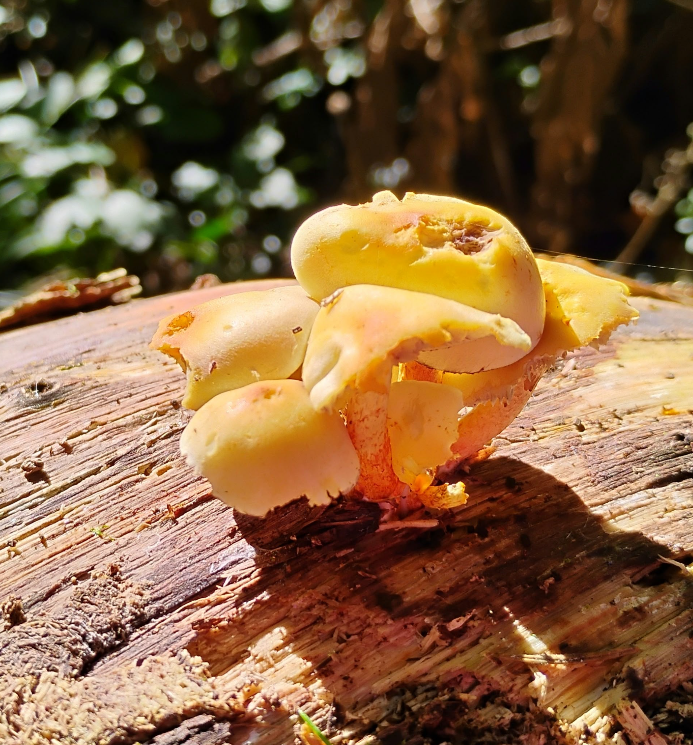
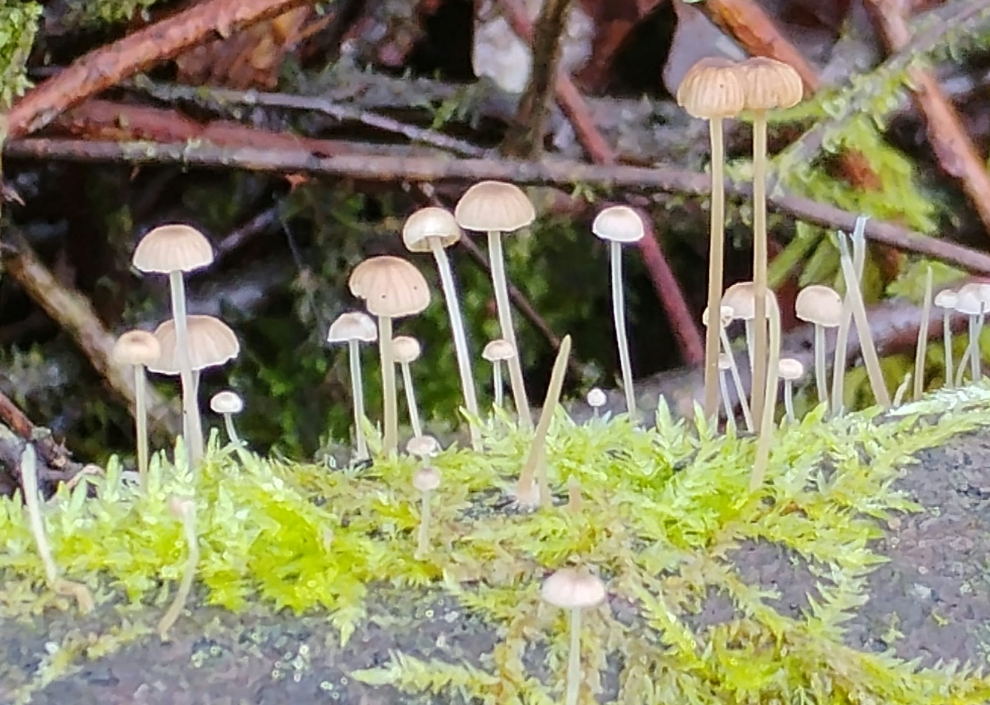
Photos by Mattie and Lisa CWT Volunteers

