
When our geology becomes a global classroom
Sometimes it takes someone from the other side of the world to make you look at somewhere familiar with fresh eyes.
That happened at Coed y Werin this week.
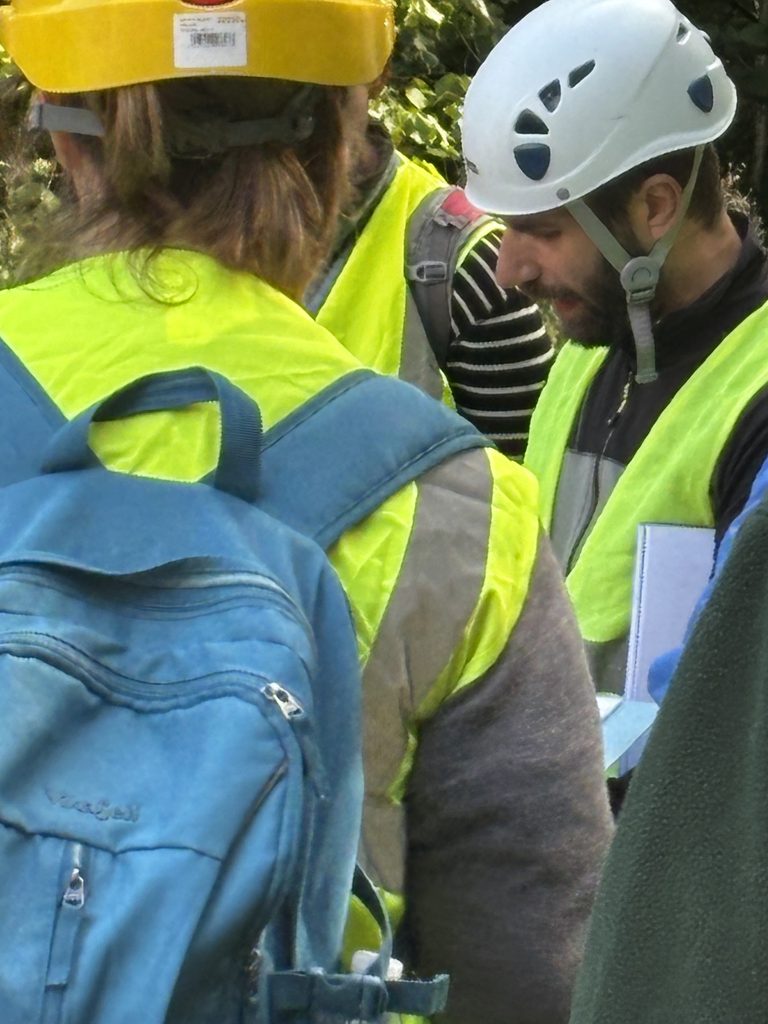
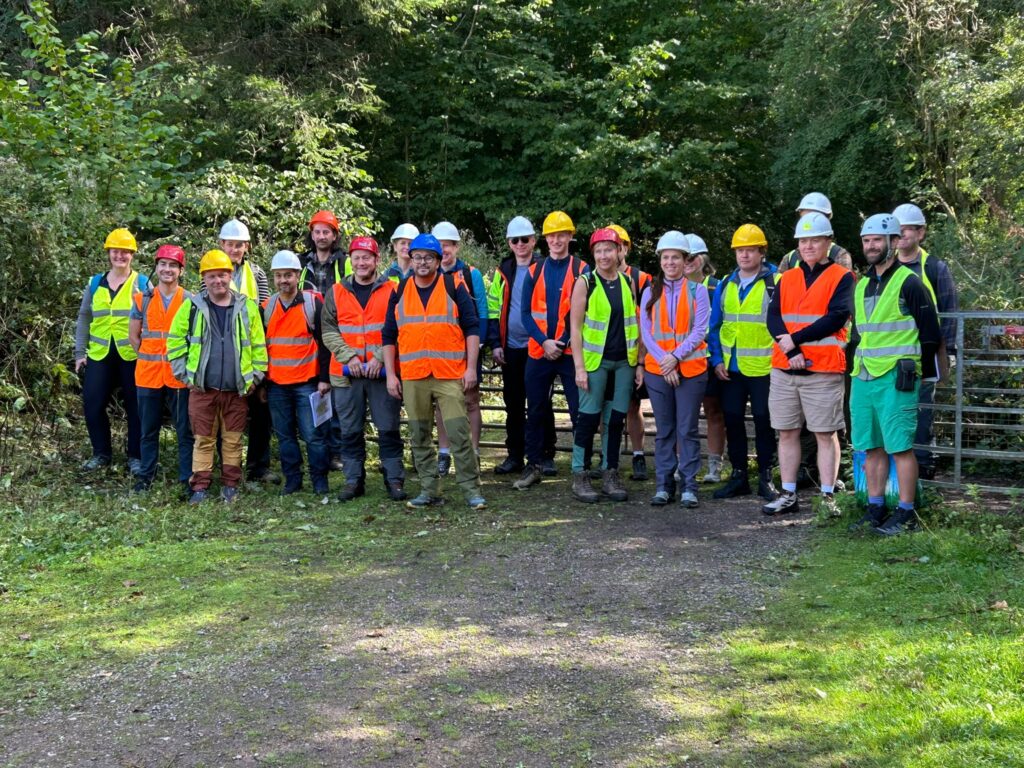
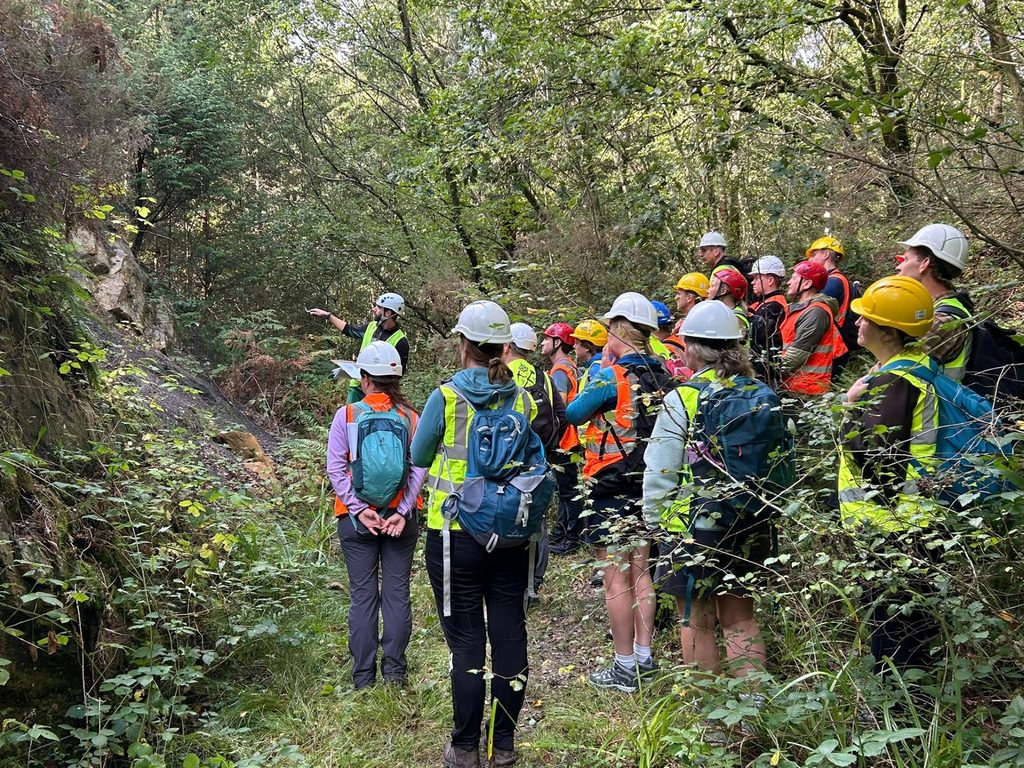
Andrew Green, Senior Petroleum Geochemist and Basin Modeller from Integrated Geochemical Interpretation Ltd. (IGI), brought 22 men and women geoscientists and drilling engineers from the international energy industry to visit our geological SSSI at Coed y Werin.
Most of the group had travelled from Norway, but the field trip was genuinely international, with a woman from Brazil and a man from Italy also among the industries visitors.
Andrew had kindly invited our Treasurer, Vernon, and me to join them, giving us the opportunity to see our own landscape through the eyes of people for whom these rocks are an important part of their professional education. He also pointed out that the kind of geological exposure we have here at Coed y Werin simply isn’t something they have in Norway.
Suddenly, the old clay pit we know so well took on a rather different significance.
A geological window into another world
The former clay workings provide a rare and accessible cross-section through the Upper Carboniferous Coal Measures, revealing rocks that record environments that existed more than 300 million years ago.
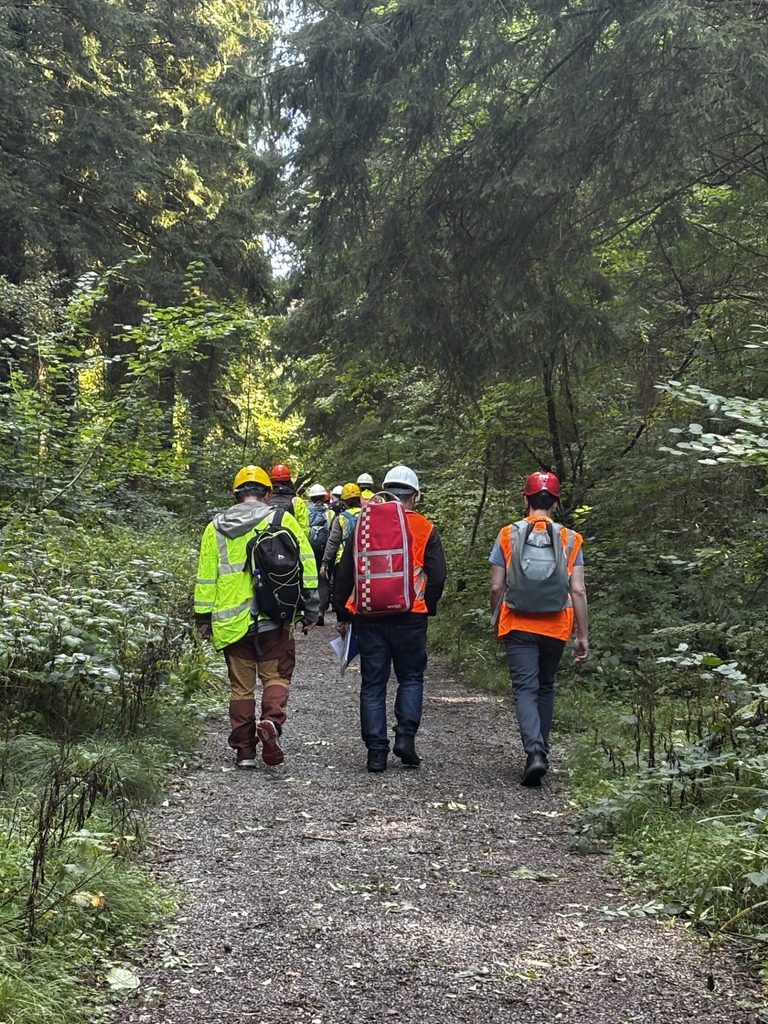
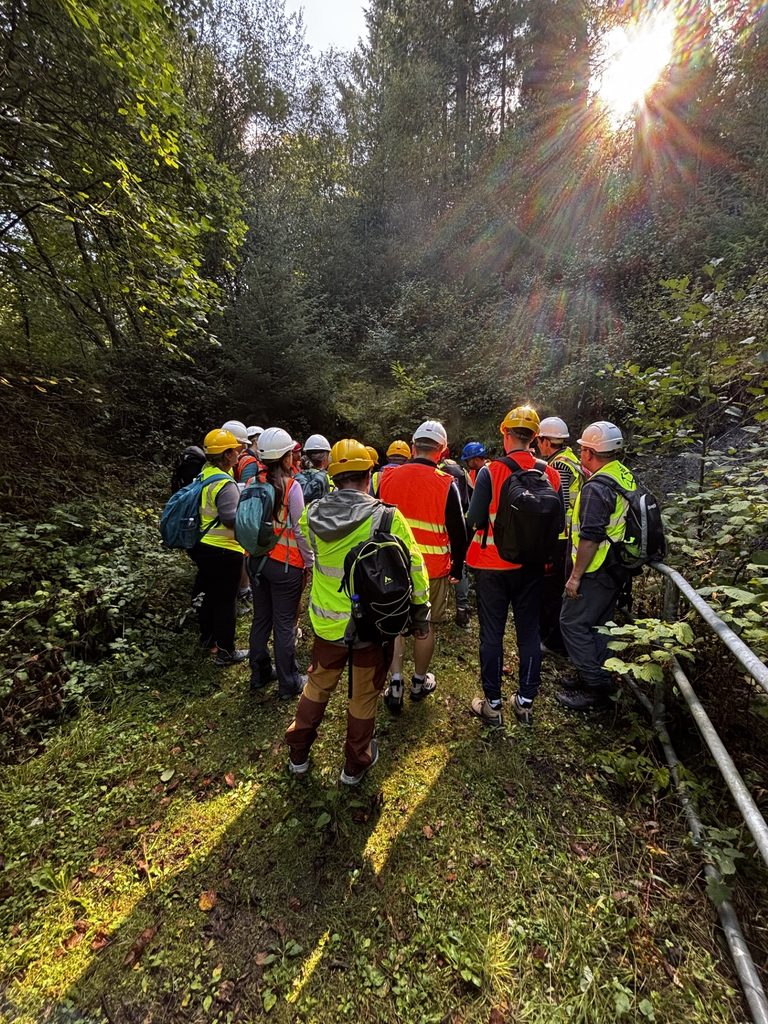
For geoscientists and drilling engineers, being able to stand in front of those layers and examine them directly is incredibly valuable.
They can see how different rock types are arranged, consider the environments in which they formed and examine the relationships between marine mudstones, deltaic sandstones and coal seams.
They can also study the faults and fractures visible within the exposure features that help professionals understand how geological structures have behaved and how rock formations may respond under stress.
And because Coed y Werin was once a clay pit, the exposed clay-rich formations provide another valuable learning opportunity. Understanding how clays and shales behave is particularly relevant to the challenges encountered during drilling.
What we see as an old quarry face is, to these professionals, a three-dimensional geological classroom. A classroom without walls. That was probably the thing I found most fascinating about the visit.
We tend to talk about Coed y Werin in terms of what it gives to our local community, a place to walk, volunteer, watch wildlife, breathe, explore and reconnect with nature.
And it absolutely is all of those things. But beneath our feet is another story. A story that began more than 300 million years ago and which is still being used to teach people today.
Our geology is not simply something preserved in a textbook or behind glass in a museum. It is right there in the landscape, exposed for people to examine, question and learn from.
And today, that learning was international. All standing together in an old clay pit in Caerphilly, reading the story written into the rocks.
And then there was a little bit of Wales…
Of course, no international visit to Coed y Werin would be complete without sending our visitors home with a little piece of Wales. Somehow I found myself being asked to teach them a few Welsh words to take back with them! Croeso being the first we shared.
So, alongside all that talk of stratigraphy, geological structures and subsurface formations, we finished with a little Welsh language lesson.
I wonder how many of those 22 visitors will remember their Welsh words when they get back to Norway, Brazil or Italy?
Perhaps that’s another kind of connection. Because places like Coed y Werin connect people in ways we don’t always anticipate. The geology connects us to a distant past. The woodland connects us to nature. And sometimes, simply standing together in the same place, sharing knowledge and a few words from another language, connects people across countries and continents.
Why this place matters
As the community owners of Coed y Werin, we are used to thinking about our responsibility to care for the woodland and its wildlife. But our responsibility also includes protecting the remarkable geological heritage beneath it.
We are custodians of something that is far older than the woodland itself, a geological record that has survived hundreds of millions of years and which continues to have educational value today.
Andrew’s comment that this is an exposure they don’t have in Norway was a wonderful reminder that the value of Coed y Werin reaches far beyond our boundaries. It may be a community woodland in Caerphilly. But for one day this week, it became a global classroom. And I think that’s rather special.
There was one moment when the group really came alive.
We took them to one of the most remarkable features of the site, a huge rock face containing a Stigmaria fossil, the preserved remains of the root system of one of the giant plants that formed the ancient Carboniferous forests.
It is difficult to stand beside it and comprehend what you are looking at. This isn’t a replica in a museum. It isn’t a photograph in a textbook. It is the rock.
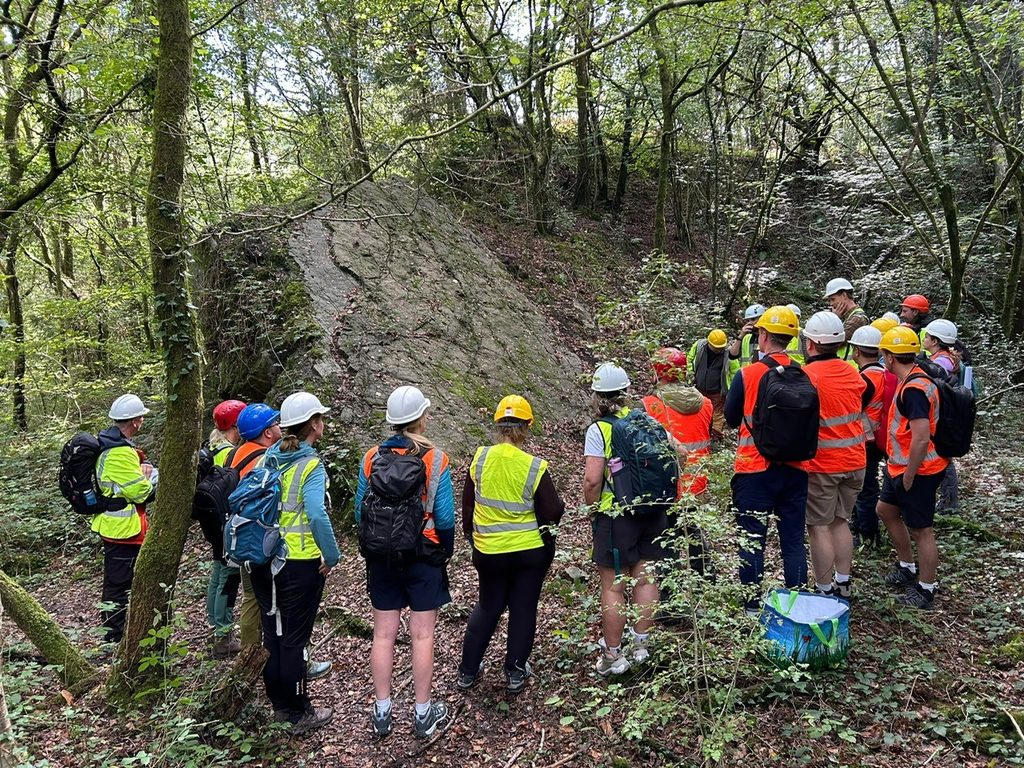

The fossil is embedded within the face of the old quarry, a direct connection to a landscape that existed more than 300 million years ago.
And suddenly the group, who had been listening intently and examining the geology around them, became animated. People moved closer, hands reached out towards the rock and there was a real sense of excitement as they began to appreciate what they were looking at, what they were touching.
Even Andrew was thrilled. He had visited Coed y Werin before, but on that occasion only a small portion of the fossil had been visible. Since then, our work at Coed y Werin had uncovered much more of the rock face.
Andrew from Integrated Geochemical Interpretation Ltd was amazed by just how extensive the fossil actually is.
For us, there was something rather wonderful about watching someone who knows this geology so well being genuinely excited by something we had helped reveal.
It was another reminder that caring for Coed y Werin isn’t simply about maintaining a woodland. Sometimes, caring for a place means allowing its hidden stories to emerge. And this one has been waiting in the rock for over 300 million years. A living museum beneath our feet.
Standing there with visitors from Norway, Brazil and Italy gathered around this ancient fossil, I found myself thinking about the extraordinary journey of this particular piece of rock.
The trees and plants that once grew in those ancient Carboniferous forests have long since disappeared. The landscape they inhabited has changed beyond recognition. Continents have shifted, mountains have risen and eroded, seas have come and gone.
Yet here, in an old clay pit in Caerphilly, a fragment of that ancient world remains exposed for us to see.
It really is a kind of living geological museum.
And today, it was being used exactly as it should be, to share knowledge, encourage curiosity and help people understand the geological processes that shaped our planet.
Thank you to Andrew Green, Senior Petroleum Geochemist and Basin Modeller from Integrated Geochemical Interpretation Ltd for inviting us to join his field trip and to see first hand how Coed y Werin provides such a valuable outdoor classroom for geoscience students.
it was also wonderful meeting people who really know their rocks .

