

How schoolchildren, dedicated volunteers, and a handful of tiny hazel dormice are writing a new chapter for our woodland
Deep in the heart of Coed y Werin, 23 acres of accessible woodland on the edge of Caerphilly, something is stirring.
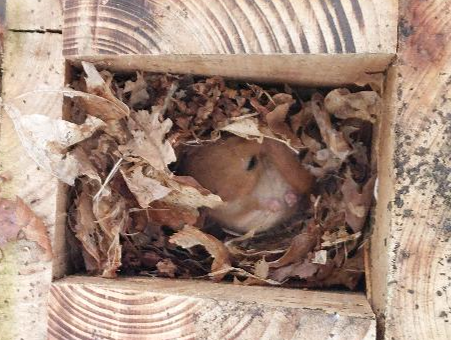
Curl up inside one of the new nest boxes fastened to the trees and you might, if you are very lucky and very small, find a hazel dormouse: all ginger fur, liquid dark eyes, and a cloud of a tail. This spring, for the first time, those dormice have moved into boxes built by the hands of local schoolchildren. It is, in the truest sense, a story of a community caring for something precious together.
A woodland worth protecting
Coed y Werin is no ordinary local green space. Its designation as a Site of Special Scientific Interest (SSSI) reflects the outstanding natural value held within its canopy, its understorey, and its rich woodland floor. It sits freely open to the public, a rare gift in itself, yet it shelters one of Britain’s most elusive small mammals: the hazel dormouse.
Small enough to curl inside a walnut shell when they hibernate, dormice are among the most sensitive indicators of woodland health. Their presence here is a testament to Coed y Werin’s intact habitat structure: abundant hazels and bramble, connected canopy and the kind of undisturbed quiet that these creatures require to thrive.
“The dormice are monitored as part of the National Dormouse Monitoring Programme run by the People’s Trust for Endangered Species — a nationwide effort to track and protect a species in serious decline.”
The volunteers who make it happen
The people behind the programme
Sandra & Pete — Our Volunteer Ecologists
Season after season, Sandra and Pete return to Coed y Werin to walk the monitoring routes, check every box, and record what they find. Their work is meticulous, patient, and undertaken entirely out of love for this woodland and the creatures within it. Each visit through the trees, in early morning light, in all weathers, through the long monitoring season, adds another data point to a picture that helps us understand and safeguard dormice at a national level. The Trust is immensely proud of them both.
What Sandra, Pete, and fellow volunteers do on monitoring visits is far more than a simple count. Each dormouse encountered is carefully assessed and recorded before being released unharmed:
- Age * Sex
- Weight * Breeding Status
- Torpid or Active * Nest Type & Conditions
This level of detail, repeated across hundreds of sites around the country, builds the long-term dataset that tells scientists whether dormouse populations are stable, expanding, or in need of urgent intervention. Every entry Sandra and Pete make at Coed y Werin is a contribution to that national picture.
The big build — students take on a challenge
By 2025, many of the dormouse monitoring boxes at Coed y Werin had reached the end of their natural life. Weathered and rotting, they needed to be replaced. Rather than sourcing replacements quietly, Sandra, Pete and the Trust saw an opportunity to do something rather more exciting.
Woodwork students from Bedwas High School took on the challenge. Working in their school workshop, they constructed a set of new dormouse boxes — solid, crafted with care, and designed to the exact specification that replicates the natural tree-hole cavities that dormice use to breed. It was practical skills education with a genuine purpose: these boxes were going into a real SSSI, for a real endangered species.
“The boxes replicate holes in trees that dormice use to breed in. Every one built by those students was a real contribution to conservation — not a classroom exercise, but the genuine article.”
To the woods — and a story worth telling
In July 2025 the students didn’t just hand over their boxes and go home. They came to Coed y Werin themselves, joining Sandra, Pete and the Trust team in the woodland to help install the new boxes and remove the old ones. It was, by all accounts, considerably more appealing than an afternoon in class.
The old boxes were checked carefully before removal, any dormice present were recorded before the boxes came down. The students saw at first hand what their work was for, and why it mattered. As a thank you, the Trust laid on a campfire with hot chocolate and the obligatory toasted marshmallows — a small reward for a genuinely significant contribution.
The news we have been waiting for
In May 2026 came the moment that made everything worthwhile. Monitoring checks of the boxes revealed that dormice have moved in, taking up residence in the very boxes those students constructed with their own hands just months earlier.
It is hard to overstate what this means. Dormice are creatures of habit and high standards: they will not occupy a box that does not meet their exacting requirements. The fact that they have chosen these new boxes is confirmation that the craftsmanship was sound, the installation was right, and that Coed y Werin continues to provide the kind of habitat that supports this precious species.
A thank you from the dormice, as well as from the Trust — though theirs is expressed in ginger fur rather than words.
Why this matters for our woodland
The story of these boxes is, at its heart, a story about what kind of place Coed y Werin is. Not every woodland in Wales can support dormice. The species requires structural complexity, canopy connectivity, and the kind of quiet, undisturbed richness that comes only from careful, long-term stewardship. That Coed y Werin has it and has it in a form that passes the dormouse’s own assessment reflects everything that the Caerphilly Woodlands Trust and its volunteers work to protect.
It also reflects what is possible when a community comes together around something it values. Students who might never have thought of themselves as conservationists have left a lasting mark on this woodland. Volunteers who give up weekends and early mornings throughout the season are building a scientific record of real national importance. And in the boxes now nestled among the trees of Coed y Werin, dormice are raising the next generation in conditions made possible by all of them.
Support Coed y Werin
Coed y Werin is a publicly accessible woodland held in trust for the community. Your support helps us continue monitoring, habitat management, and conservation work — and keeps this remarkable place open to everyone.

